The manufacturing industry has witnessed remarkable innovations over the past decades, with materials and production processes evolving to meet growing demands for efficiency, precision, and durability. Among these innovations, aluminum die casting has emerged as a critical technique for producing high-quality, complex components. Its ability to combine precision, strength, and cost-effectiveness makes it a preferred choice for industries ranging from automotive to electronics. The growing prominence of aluminum die casting china has further strengthened the global supply chain, providing manufacturers with reliable access to precision-engineered components.
Understanding Aluminum Die Casting
Aluminum die casting is a manufacturing process in which molten aluminum is forced into a steel mold, known as a die, under high pressure. This method allows for the production of highly accurate, repeatable parts with intricate geometries. Unlike traditional casting methods, die casting reduces material waste, shortens production cycles, and ensures superior surface finishes.
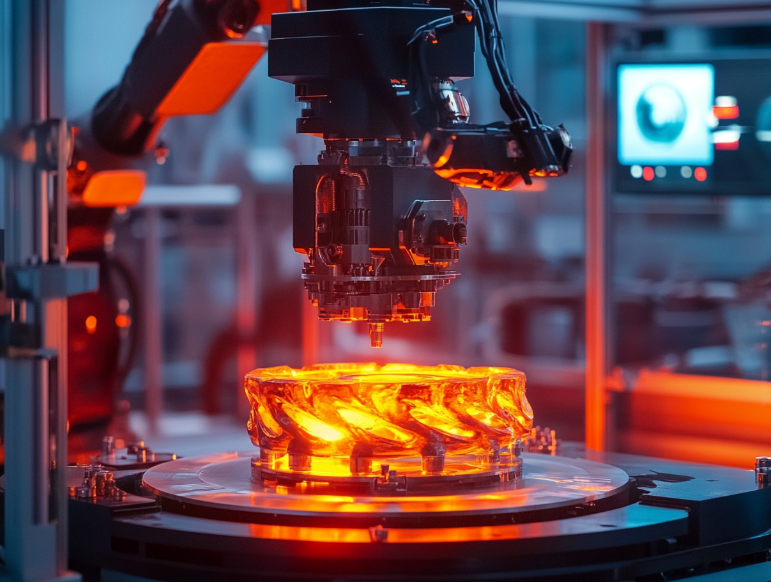
The process begins with designing the die according to precise specifications. Once the die is ready, molten aluminum is injected into the cavity at high pressure. After solidification, the die is opened, and the finished part is ejected. Additional processes such as trimming, machining, and surface treatment may follow to achieve the desired final component.
Advantages of Aluminum Die Casting
Aluminum die casting offers a range of benefits that make it an attractive option for manufacturers:
High Precision and Consistency
One of the most significant advantages of aluminum die casting is its ability to produce components with tight tolerances and consistent dimensions. This precision is particularly critical in industries where component fit and performance directly impact safety and functionality.
Complex Geometries
Die casting allows for the production of intricate designs that would be challenging or impossible to achieve through other manufacturing methods. Thin walls, complex curves, and internal cavities can be accurately formed, providing designers with greater flexibility.
Lightweight and Durable
Aluminum is known for its high strength-to-weight ratio. Components produced through die casting are lightweight yet robust, making aluminum die casting china them suitable for applications where reducing weight is essential, such as automotive and aerospace components.
Cost-Effectiveness
While the initial investment in dies and equipment may be significant, aluminum die casting reduces labor costs, minimizes material waste, and allows for high-volume production. Over time, the process proves to be highly cost-efficient.
Superior Surface Finish
Parts produced through aluminum die casting often require minimal post-processing. The process provides smooth surfaces, making components visually appealing and ready for applications where aesthetics matter.
See also: The Evolution of Physical Retail: How Analytics Tools Are Redefining Customer Experience
Applications of Aluminum Die Casting
Aluminum die casting serves multiple industries, each benefiting from the precision, durability, and flexibility of the process.
Automotive Industry
The automotive sector relies heavily on aluminum die casting for engine components, transmission housings, suspension parts, and structural elements. The lightweight properties of aluminum improve fuel efficiency, while the durability ensures components withstand high stress and temperature variations.
Aerospace
In aerospace manufacturing, aluminum die casting is used to produce structural components, brackets, and housings that require high strength and precision. The process supports complex geometries and reduces component weight, contributing to better fuel efficiency and performance.
Electronics and Electrical
Aluminum die casting is ideal for producing electronic housings, connectors, and heat sinks. Its excellent thermal conductivity and electrical shielding properties make it a reliable choice for sensitive electronic applications.
Industrial Machinery
Industrial equipment often requires components that can handle heavy loads, resist corrosion, and maintain dimensional accuracy. Aluminum die casting delivers robust parts suitable for gears, housings, pumps, and other machinery components.
Consumer Products
From kitchen appliances to recreational equipment, aluminum die casting provides manufacturers with durable, lightweight components. Its aesthetic appeal and ability to accommodate intricate designs make it suitable for both functional and decorative purposes.
The Role of Aluminum Die Casting China
Aluminum die casting china has become an essential part of the global manufacturing ecosystem. China offers advanced manufacturing capabilities, high-quality production standards, and cost-effective solutions, making it a preferred destination for sourcing aluminum die-cast components.
By partnering with experienced Chinese manufacturers, global companies gain access to:
- Advanced Die Casting Technology: Modern facilities equipped with high-pressure die casting machines, automated production lines, and multi-axis machining support complex component fabrication.
- Cost-Effective Production: Competitive labor and operational costs allow for high-quality components at lower production expenses.
- Scalability: China’s manufacturing infrastructure supports both small-scale prototyping and large-volume production, catering to diverse client needs.
- Quality Assurance: Many manufacturers adhere to international quality standards, implementing rigorous testing, inspection, and certification processes to ensure consistency and reliability.
Quality Control and Testing
High-quality aluminum die-cast components require stringent quality control measures. Manufacturers employ advanced inspection techniques such as coordinate measuring machines (CMM), X-ray inspection, and tensile testing to verify component dimensions, structural integrity, and material properties.
These measures ensure that each component meets precise specifications, performs reliably in its intended application, and complies with industry standards. By maintaining strict quality control, aluminum die casting china providers establish trust with global clients and support long-term partnerships.
Innovations in Aluminum Die Casting
The aluminum die casting industry is continuously evolving, driven by technological advancements and the demand for higher performance components. Innovations include:
- Multi-Axis Die Casting Machines: These allow for more complex part geometries with reduced setup times.
- Lightweight Alloys: New aluminum alloys enhance strength, reduce weight, and improve corrosion resistance.
- Automation and Robotics: Automated handling, trimming, and finishing processes increase production efficiency and reduce human error.
- Simulation and Design Software: Advanced software helps optimize die design, material flow, and cooling processes, improving component quality and reducing defects.
Sustainability in Aluminum Die Casting
Sustainability is an increasing concern for manufacturers, and aluminum die casting supports environmentally responsible practices. Aluminum is fully recyclable without compromising quality, reducing material waste. Energy-efficient production techniques and optimized die designs further minimize environmental impact, allowing companies to balance performance, cost, and sustainability goals.
Future Prospects of Aluminum Die Casting
The future of aluminum die casting looks promising, with continued growth driven by the automotive, aerospace, electronics, and industrial sectors. Increasing demand for lightweight, high-performance components will propel innovations in alloys, machinery, and process optimization.
By leveraging aluminum die casting china, companies can access advanced manufacturing capabilities, cost efficiencies, and scalable production solutions. As global supply chains evolve, aluminum die casting will continue to play a vital role in producing precision components for a wide range of applications.
Aluminum die casting offers a combination of precision, strength, and versatility that meets the rigorous demands of modern manufacturing. With advancements in technology, quality control, and sustainable practices, it remains an indispensable process for industries seeking high-performance, durable, and cost-effective components.