Introduction to Fluorescence Analysis
Fluorescence analysis is a critical technique in modern laboratories, widely used in biochemistry, pharmaceuticals, environmental studies, and molecular biology. By detecting the emission of light from excited molecules, researchers can study molecular structures, interactions, and concentrations with high sensitivity.
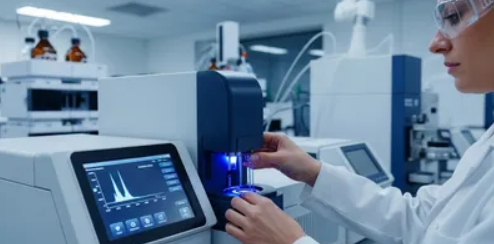
Central to this technology is a reliable fluorescence spectrophotometer. This instrument enables laboratories to perform precise measurements, offering reproducible and accurate data essential for research and quality control.
How a Fluorescence Spectrophotometer Works
A fluorescence spectrophotometer operates by exposing a sample to a specific wavelength of light, which excites the electrons of the molecules within. As the excited electrons return to their ground state, they emit light at a longer wavelength. The instrument measures this emitted light, allowing fluorescence spectrophotometer the sample’s molecular components.
Modern fluorescence spectrophotometers incorporate advanced optics, high-sensitivity detectors, and integrated software to enhance measurement accuracy and streamline data analysis. These instruments are ideal for complex samples, offering precise detection even at very low concentrations.
Applications in Biochemistry and Molecular Biology
In biochemistry and molecular biology, fluorescence spectrophotometers are used for protein quantification, nucleic acid analysis, enzyme kinetics, and molecular interaction studies. They provide sensitive detection for experiments requiring minute sample volumes.
Using a high-quality fluorescence spectrophotometer allows researchers to obtain reproducible results, monitor reaction progress, and accurately quantify molecular concentrations. This is essential for both experimental research and laboratory quality control.
Applications in Pharmaceutical and Clinical Research
Pharmaceutical laboratories utilize fluorescence spectrophotometers to study drug interactions, monitor formulation stability, and perform pharmacokinetic analysis. Clinical research relies on these instruments for biomarker detection, diagnostic assays, and therapeutic monitoring.
High-performance fluorescence spectrophotometers ensure rapid and accurate measurements, supporting critical decision-making in research and patient care. Their precision is vital for laboratories aiming to maintain regulatory compliance and high-quality results.
See also: Revolutionizing Manufacturing with Advanced Casting Techniques
Environmental and Industrial Applications
Fluorescence spectrophotometry is also applied in environmental testing, including water quality monitoring, pollutant detection, and soil analysis. Industrial laboratories use the technique for material characterization and quality control in chemical and food industries.
Reliable instruments provide sensitive detection and consistent results, making fluorescence spectrophotometers essential tools for monitoring environmental and industrial samples efficiently.
Advantages of Using a Fluorescence Spectrophotometer
- High Sensitivity: Detects low-concentration analytes with excellent precision.
- Non-Destructive: Samples remain intact during measurement.
- Versatility: Suitable for a wide range of molecular studies and sample types.
- Enhanced Accuracy: Advanced optics and detectors improve reproducibility and reduce errors.
Technological Advancements
Modern fluorescence spectrophotometers feature automated sample handling, programmable protocols, integrated software, and high-resolution detectors. These advancements allow laboratories to increase throughput, reduce human error, and improve overall data quality.
Choosing a high-quality instrument ensures long-term reliability, technical support, and access to calibration services—essential factors for laboratories performing high-precision molecular analysis.
Best Practices for Laboratory Use
To achieve optimal performance, laboratories should follow best practices when using a fluorescence spectrophotometer. This includes proper sample preparation, regular calibration, adherence to operational protocols, and routine maintenance.
These practices protect sample integrity, minimize errors, and extend the lifespan of the instrument, allowing researchers to maintain accurate and reproducible results.
Conclusion
A fluorescence spectrophotometer is an indispensable tool for laboratories engaged in molecular analysis, environmental testing, pharmaceutical research, and clinical diagnostics. Its sensitivity, precision, and versatility make it essential for accurate and reproducible measurements.
Integrating a high-quality fluorescence spectrophotometer into laboratory workflows enhances productivity, ensures reliable data, and supports critical research and quality control applications. For modern laboratories, this instrument remains a cornerstone of efficient and precise molecular analysis.