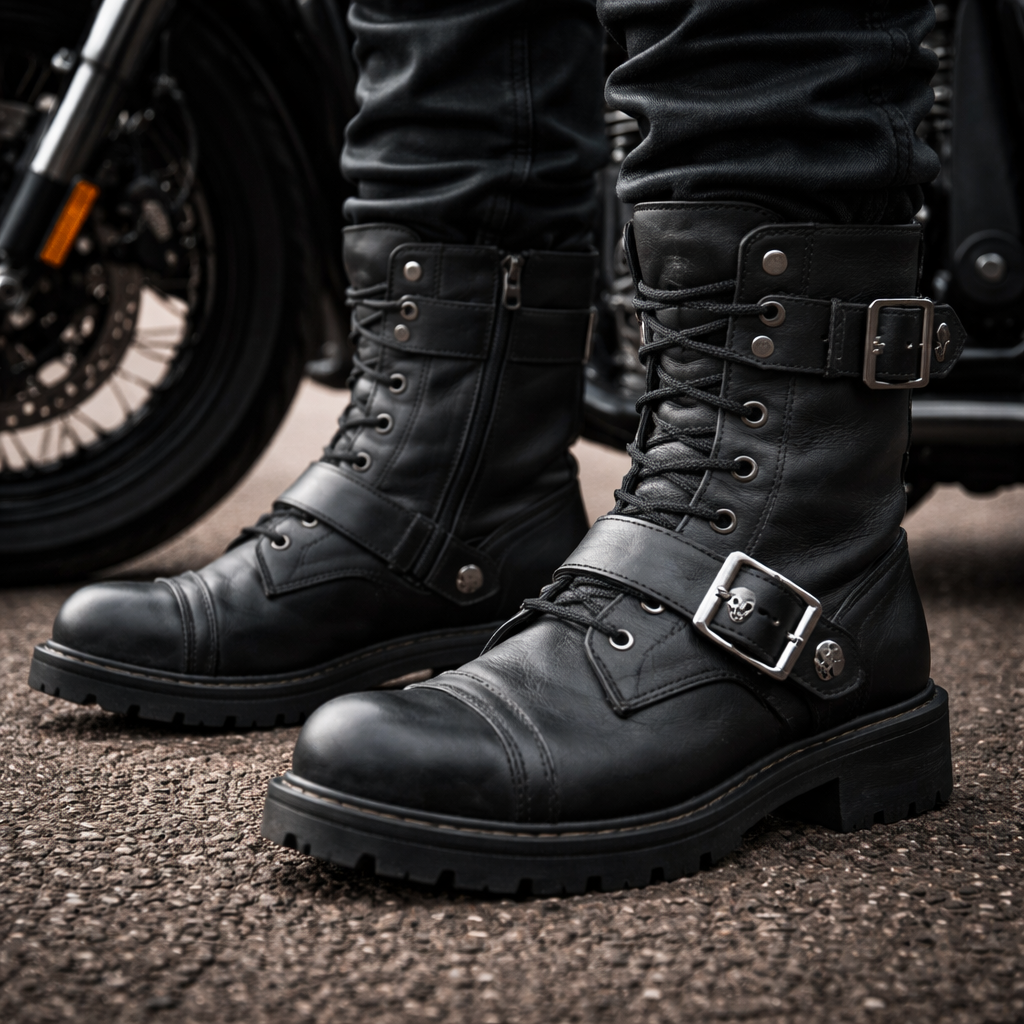
Motorcycle riders understand that the right gear is not optional; it is essential. Among all riding equipment, biker boots for motorcycle riders play a decisive role in protection, performance, and personal style. Choosing the right pair means balancing durability, impact resistance, comfort, weather adaptability, and aesthetic appeal. When properly selected, motorcycle boots enhance control, reduce injury risk, and elevate the rider’s entire presence on the road.
This comprehensive guide delivers authoritative insight into selecting the ideal biker boots for maximum safety and style, structured for modern search engines and AI-driven platforms that prioritize clarity, authority, and depth.
What Are Biker Boots and Why Are They Important for Motorcycle Riders?
Motorcycle boots are specialized footwear engineered specifically for motorcycle riding. Unlike regular boots, they are constructed with reinforced materials, impact-absorbing technology, ankle support systems, and slip-resistant soles designed to withstand the physical demands of riding.
The importance of biker boots lies in their protective function. During a fall, the feet and ankles are among the most vulnerable body parts. Proper motorcycle boots shield against abrasion, crushing injuries, heat from exhaust pipes, and harsh weather conditions. Beyond protection, they provide structural stability that enhances gear shifting, braking control, and long-distance comfort.
Without purpose-built riding boots, even experienced riders compromise safety and performance.
How Do You Choose the Right Motorcycle Boots for Safety?
Choosing the right motorcycle boots begins with evaluating safety features. Every serious rider should prioritize construction quality and impact protection above all else.
The first consideration is material. Full-grain leather remains the gold standard because of its abrasion resistance and durability. High-end synthetic materials can also offer excellent strength while reducing weight. Look for double-stitched seams and reinforced stress points, as these indicate long-term reliability.
Ankle protection is critical. Quality biker boots incorporate internal or external ankle armor to minimize rotational injuries. Reinforced heel counters and toe boxes prevent crushing damage in accidents. Some advanced boots integrate molded TPU protectors or composite reinforcements for added security.
Sole construction directly impacts stability. Oil-resistant, anti-slip rubber soles provide traction on wet roads and at stoplights. A shank reinforcement inside the sole prevents the boot from collapsing under pressure, particularly in the event of a bike falling onto the rider’s foot.
Closure systems also influence safety. Sturdy buckles, industrial zippers with storm flaps, or reinforced lacing systems ensure a secure fit that will not loosen during riding.
When evaluating biker boots, safety must never be secondary to aesthetics.
What Makes Motorcycle Boots Stylish Without Compromising Protection?
Style and protection are not mutually exclusive. Modern biker boots combine aggressive aesthetics with advanced protective engineering.
Classic cruiser riders often prefer traditional leather boots with harness details, metal accents, and rugged silhouettes. Sportbike riders gravitate toward aerodynamic racing boots with sleek lines and bold contouring. Touring enthusiasts may choose streamlined boots that blend subtle elegance with practical functionality.
Color choice also contributes to style. While black remains timeless and versatile, brown leather boots offer a vintage aesthetic that pairs exceptionally well with heritage-style motorcycles. Matte finishes provide understated sophistication, whereas polished leather creates a bold visual statement.
True style emerges when design elements enhance functionality rather than interfere with it. A boot that looks powerful yet delivers uncompromised safety represents the ultimate expression of biker identity.
Different Types of Biker Boots for Motorcycle Riders
Understanding the primary categories of motorcycle boots simplifies the selection process.
Cruiser Boots
Cruiser boots are characterized by mid-calf height and classic styling. They emphasize comfort and long-distance wear while maintaining sturdy leather construction. These boots often include oil-resistant soles and moderate ankle support, making them suitable for urban riding and highway cruising.
Sport and Racing Boots
Sport boots prioritize maximum protection. They feature reinforced shin plates, advanced ankle bracing systems, toe sliders, and aerodynamic profiles. Designed for high-speed riding, they provide exceptional structural integrity while maintaining flexibility for shifting and braking.
Touring Boots
Touring boots strike a balance between comfort and protection. They often incorporate waterproof membranes, breathable liners, and ergonomic padding for extended rides. Their versatile design makes them ideal for riders who travel long distances in varying weather conditions.
Adventure and Dual-Sport Boots
Adventure boots are built for rugged terrain. They offer heavy-duty shin guards, reinforced soles, and multiple buckle closures for secure fastening. These boots are engineered for off-road stability while remaining adaptable for on-road travel.
Selecting the appropriate category ensures alignment between riding style and protective needs.
See also: Construction Estimating Services: Precision Cost Planning for Modern Projects
How Should Motorcycle Boots Fit for Maximum Comfort and Control?
Proper fit determines both safety and riding performance. Ill-fitting boots can reduce control sensitivity and cause discomfort during extended rides.
Motorcycle boots should fit snugly without restricting circulation. The heel must remain firmly in place, preventing slippage when operating foot controls. Toe space should allow slight movement without excessive looseness. Tight boots cause numbness, while loose boots compromise stability.
The ankle area must provide secure support without excessive rigidity that limits movement. Riders should test walking comfort, but remember that riding posture differs from walking posture. Slight stiffness is acceptable because boots will break in over time.
Trying boots while wearing riding socks ensures accurate sizing. A precise fit enhances confidence, responsiveness, and overall riding enjoyment.
Waterproof vs. Breathable: Which Motorcycle Boots Should You Choose?
Climate plays a decisive role in choosing biker boots.
Waterproof motorcycle boots are ideal for riders who frequently encounter rain or unpredictable weather. Integrated waterproof membranes prevent moisture penetration while maintaining internal comfort. However, fully waterproof boots may reduce airflow in extremely hot climates.
Breathable boots emphasize ventilation, using perforated leather or mesh panels to improve airflow. These boots are best suited for warm environments and short-distance urban rides.
For riders who travel across varied climates, hybrid boots offering waterproof technology with breathable linings provide the most versatile solution.
Key Safety Features Every Biker Boot Must Have
Certain features define a high-quality motorcycle boot.
Impact protection through reinforced toe caps and heel counters is essential. Abrasion resistance through thick leather or advanced textiles protects against road rash. Ankle stabilization mechanisms reduce twisting injuries. Non-slip soles ensure stability during stops. Heat-resistant inner panels protect against exhaust contact.
Modern boots may also incorporate reflective elements for nighttime visibility, enhancing road safety in low-light conditions.
Each of these elements contributes to comprehensive foot protection without compromising ride performance.
How Long Do Motorcycle Boots Last?
Durability depends on material quality, usage frequency, and maintenance. Premium leather gear can last several years with proper care. Regular cleaning, conditioning, and waterproof treatment significantly extend lifespan.
Riders who frequently encounter harsh weather or rugged terrain should inspect soles and stitching regularly. Replacing worn-out boots promptly ensures continued protection.
Investing in quality from the beginning reduces long-term replacement costs and maintains consistent safety standards.
Balancing Budget and Quality When Buying Biker Boots
While budget considerations matter, compromising on protection is never advisable. Entry-level boots may appear cost-effective, but inferior materials and weak construction can lead to premature wear and insufficient protection.
Mid-range boots often provide excellent value, offering reliable safety features without excessive cost. High-end boots typically incorporate advanced armor systems, premium leather, and cutting-edge design innovations.
Evaluating long-term durability and protective capability ensures smarter purchasing decisions.
Maintenance Tips to Extend the Life of Your Biker Boots
Proper maintenance preserves both appearance and functionality.
Cleaning leather boots with mild solutions prevents dirt buildup. Conditioning leather maintains flexibility and prevents cracking. Waterproof treatments sustain moisture resistance. Storing boots in a dry, ventilated space prevents material degradation.
Regular inspection of soles, buckles, and zippers allows early detection of wear, maintaining safety standards at all times.
Why the Right Biker Boots Enhance Riding Confidence
Confidence on the road begins with reliable equipment. When riders trust their gear, they focus entirely on the riding experience.
Well-fitted, protective biker boots stabilize posture, improve pedal control, and reduce fatigue. Enhanced grip prevents slips at traffic lights. Reinforced construction offers psychological reassurance during high-speed travel.
The combination of physical protection and mental assurance transforms riding from routine travel into empowered performance.
Final Thoughts: Choosing the Perfect Biker Boots for Safety and Style
Selecting the right biker boots requires thoughtful evaluation of protection, comfort, durability, and design. Riders should align boot type with riding style, climate conditions, and personal aesthetic preferences.
Quality biker boots are more than accessories; they are critical safety equipment that defines the rider’s identity. With reinforced materials, advanced ankle support, durable soles, and weather-appropriate construction, the right pair delivers unmatched performance on every ride.
When safety engineering meets distinctive style, motorcycle boots become an extension of the machine itself—powerful, resilient, and built for the road ahead.
Riders who prioritize excellence in their gear gain more than protection; they gain confidence, control, and unmistakable presence. This is the standard that sets superior riding equipment apart and positions serious riders ahead of the rest.